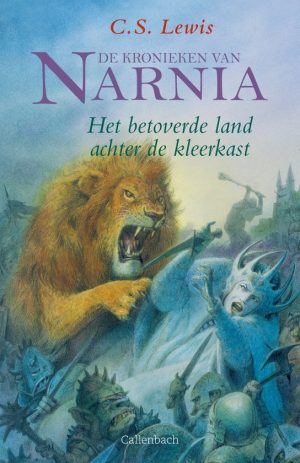
I even hated the cover of this book. I mean, look at it. Its clearly an uneven battle.
I admit Prince Caspian has its moments, like the madcap romp with Bacchus and the maenads. But compared to the rest of the Chronicles of Narnia, I don’t like it very much.
In fact, I’d rather it didn’t exist at all. There’s no need for it to. The same themes of The Lion, the Witch, and the Wardrobe are rehashed and so is the same plot. If you’re reading the series for the first time and skip it to go on to The Voyage of the Dawn Treader, you wouldn’t be missing much. In fact, the latter book makes a far better sequel. In it, the reader gets to relax and explore Narnia, not futz around retreading what’s gone before.
(If I-the-writer could do a restructure of the series I’d excise Telmar altogether and make Caspian the prince of a later dynasty that lost its connection to true Narnia. The why and how aren’t that important. The journey of the Dawn Treader would then be a way for him to find it and the seven lost lords. There! I solved the problem with a few strokes of my keyboard.)
Prince Caspian was the last book of Narnia that I’d read. I had just turned 14 and wanted to complete the series, having read the other books multiple times. It was a disappointing send-off. Looking at it now with adult eyes, it’s just not a good book.
To begin with, it’s ill-conceived. Narnia was restored to its glory at the end of LW&W, and now we have to go through all of that again? WTF is that? It makes more sense to me, as a writer, to do a sequel that explores what Narnia is. That’s what a reader would want, having had their appetites whetted by the previous book. Not some dull stuff about politics, feuding lords, and foreign colonization.
The book even begins dully, with the Pevensies waiting for the train that will take them back to school. Their holiday is over and they’re bored, uncomfortable, gloomy. I guess the point of this scene was that Aslan (God) can call you to action at any time, any place; still it’s a less than dramatic beginning, especially compared to walking through a wardrobe and meeting a faun in the snow.
And when they get there, they futz around for three entire chapters discovering the ruins they’ve been dumped in are really Cair Paravel. Talk about disappointments. Nevertheless, it’s a hook.
But… after more poking around, nostalgia for glory days, and camping out, we switch POV over to a kid named Caspian we don’t know, who is used to convey yet more disappointments: real Narnia has been dead for 500 years, and even worse, turned into some drab, generic European country with pointedly satiric, odd-sounding names! And those names are the most interesting thing about the invaders, because they’re dull too, unlike the Calormenes who appear in the next book. There is nothing distinct about them. They don’t have the militarism of the Spartans or the tartans and clans of the Scottish. They’re not Viking analogues, or Huns, or Romans. The closest I can call them are Normans, who came from France in 1066 to conquer England and unite it, yet even the Normans had their own culture – they were descendants of Vikings who had settled down and become Christianized.
It is telling that the land of Telmar was never developed as Calormen was. Telmar still existed post-Caspian X, as a passage from The Voyage of the Dawn Treader makes clear, but its culture and governance remained vague up to The Last Battle. I don’t think Lewis himself knew exactly what it was. It remains a plot device, clear and simple, which is a shame because so much of the story concerns it.

Concept art for the 2008 movie, showing off the Telmarine’s metalworking technology with the sinister but awful looking visor/masks.
In the 2008 movie, the producers chose to give it a Spanish feel, with Conquistador helmets, Latino actors, and 15th century battle technology. Personally, I didn’t like it; but it’s as good a choice as any. If it were up to me, I’d go the Twelfth Night route: Shakespeare’s imaginary land of Illyria receives a new look with each staging of the play to let us know it’s strange and foreign. There’s nothing wrong with fresh-eyed scriptwriters and designers filling in what Lewis left unsaid.
Then there is the novel’s odd structure. We start off with the Pevensies who putter around for three chapters, then switch over to Caspian’s POV, but as conveyed by Trumpkin, who is telling them what happened prior to their summoning by the Horn. This is confusing in itself, as it’s also clear it’s not from Trumpkin’s POV – the voice is the omnipresent narrator’s, the POV Caspian’s. It’s like the beginning narrator of The Worm Ouroboros where the astral-traveling narrator disappears after a few hundred words, letting the story carry itself. Caspian’s story is conveyed in this way up to Chapter VIII, where we pick up again with the Pevensies, which is a letdown for the reader as the main plot is sidelined.
Lewis’s mistake here, I think, is assuming that readers cared more about the Pevensies than Narnia itself. He handled the story-in-a-story much better in The Horse and His Boy, where Shasta/Cor’s backstory is given in conversation by Arsheesh to Anradin, and Aravis narrates her flight from home disguised as a bit of Calormene storytelling art.
Another thing to hate in the book is all the obvious derision poked at schooling, from lies being taught (e.g. Narnia has no talking animals or mythological creatures) to blunt parodies of Shakespeare (“Pulverulentus Siccus at the fourth page of his Grammatical Garden or the Arbour of Accidence pleasantly open’d to Tender Wits?”) to Miss Frizzle and her class of dumpy, wool-stocking wearing girls to an odious child threatening another teacher with investigation by the school board. It’s stale, and it doesn’t belong, like Mrs. Beaver’s sewing machine. How the hell did the Narnian Telmarines develop an educational system so like early 20th century Britain? They were founded by pirates, and developed as Normans, most likely in isolation as no other Western countries are mentioned. Would they really have turned into stuffy British types?
Then, there’s the issue of character. I can’t fault the talking animals or the mythic Narnians — they are some of the best-sketched of the series — but the Pevensies and Caspian come across as thick. Like Telmar, they serve as plot devices to demonstrate belief and lack of belief, and there’s a lot of bickering and back-and-forth about that. (There is a LOT of bickering in this book.) Lewis should have let Trumpkin and Nikabrik carry that function and let the kids become Kings and Queens again. That’s what this reader wanted, anyway.
Actually, the novel might have been more tolerable if it had been written entirely from Caspian’s viewpoint. His reactions to the reappearance of the Pevensies would have been interesting, and his issues with belief and faith more upfront.
Then there’s the weird business of Aslan’s How.

Men an Toll, also known as the Crick Stone, Cornwall, England.
Lewis was clearly thinking of the whimsically named Stone Age triliths, tombs, and other monuments that dot the English countryside, that accreted myth and magic over the centuries; yet, we-the-reader has just visited that stone table in the previous book. It’s off-putting to discover it’s turned into this old, weird relic… like magical Narnia has somehow turned into present-day Britain. There’s so much about Prince Caspian that’s precious, ingenuous, and satiric that it has an altogether different tone than the other books, like Lewis didn’t take it as seriously. Even the Pevensies are underwhelmed by witnessing the complete wreck of their former home. The most pressing concern any of them have is Edmund losing his torch (flashlight for U.S. readers.) To Susan’s credit, she shows the most emotion and sadness of any of them.
By the time we reach the middle of the book it’s just tedious. Lucy sees Aslan and the trees dancing and the others don’t believe her and deride her and blah blah blah doubtcakes. It’s very dull compared to the plotline of LW&W, where, at the same rough point, Edmund is betraying his siblings to the White Witch to presumably be turned into statues.
There are a few good things in the first half of the book, like the poetic mentions of the kids’ former lives as grownup kings and queens, worldbuilding sneaking in as nostalgia; we also find out the world of Narnia is larger ** than it appeared to be in LW&W, setting things up for the epic voyage of Dawn Treader. But it’s mostly camping and wandering around the woods.
It’s only in the last third that we get any action. Aslan returns, everyone sees him, and he roars; the dryads, naiads, and river-gods go into action, as does Bacchus.

The Youth of Bacchus, by Adolph Bougeraeu. Surely Lewis was inspired by a scene like this. Silenus on his donkey is on the left and some centaurs on the right.
Despite PC being my least favorite of the books, it contains one of my favorite passages of description:
 |
Bacchus and Silenus and the Maenads began a dance, far wilder than the dance of the trees; not merely a dance for fun and beauty (though it was that too) but a magic dance of plenty, and where their hands touched, and where their feet fell, the feast came into existence—sides of roasted meat that filled the grove with delicious smell, and wheaten cakes and oaten cakes, honey and many-coloured sugars and cream as thick as porridge and as smooth as still water, peaches, nectarines, pomegranates, pears, grapes, strawberries, raspberries—pyramids and cataracts of fruit. Then, in great wooden cups and bowls and mazers, wreathed with ivy, came the wines; dark, thick ones like syrups of mulberry juice, and clear red ones like red jellies liquefied, and yellow wines and green wines and yellowy-green and greenish-yellow.
But for the tree people different fare was provided. When Lucy saw Clodsley Shovel and his moles scuffling up the turf in various places (which Bacchus had pointed out to them) and realised that the trees were going to eat earth it gave her rather a shudder. But when she saw the earths that were actually brought to them she felt quite different. They began with a rich brown loam that looked almost exactly like chocolate; so like chocolate, in fact, that Edmund tried a piece of it, but he did not find it at all nice. When the rich loam had taken the edge off their hunger, the trees turned to an earth of the kind you see in Somerset, which is almost pink. They said it was lighter and sweeter. At the cheese stage they had a chalky soil, and then went on to delicate confections of the finest gravels powdered with choice silver sand. They drank very little wine, and it made the Hollies very talkative: for the most part they quenched their thirst with deep draughts of mingled dew and rain, flavoured with forest flowers and the airy taste of the thinnest clouds. |
 |

It also contains my least favorite scene, the one where Nikabrik and his cronies attempt to convince Caspian to resurrect the White Witch with dark magic. I know it was stuck in for drama, and perhaps as a cautionary tale for young readers, but like Mrs. Beaver’s sewing machine, it just doesn’t fit. Necromancy is never mentioned again in the series.

Pauline Baynes’s original illustration for the attack in Aslan’s How. One of the ugliest, yet most memorable, images from the series. Of course I hated it. That damn werewolf looks like a ballet dancer and Caspian like a sissy.
Speaking as a writer, though, it is a good scene: it wouldn’t be out of place in an adult novel. Even now Nikabrik’s partisanship cuts close to home. He has his reasons, and they are valid ones; so does Trufflehunter in opposing them. I admire the dialogue. But it doesn’t belong. (I have not seen Prince Caspian the movie so I don’t know how it went down there)
Not only that, it is presented as being overheard by Peter, Edmund, and Trumpkin – just voices, no visuals – and comes to a head as the three burst into the room (see the picture above.) Lewis then hedges things by having the light go out, so we’re not sure who killed who! Trumpkin lopped off the head of the hag, and Caspian was bitten; that’s all the reader knows. It seems a coy bit of presentation so the boys aren’t marked as murderers, even of evil creatures. And a sorry excuse for why Caspian can’t fight his own one-on-one combat with King Miraz and must let Peter do it.
And actually, the Pevensies do squat-shit in this book. They save Trumpkin from drowning (or rather Susan does) and bring him back to the rebel camp at Aslan’s How; that’s about it. The girls partake in the Wild Romp, while the boys serve to save Caspian from the evil creatures and be his champions with Miraz. Even that swordfight is described with coyness, Edmund commenting to Dr. Cornelius as if he’s watching a football match through binoculars.
And let’s not go into Miraz’s convenient stumble and Sopespian’s and Glozelle’s way too convenient insurrection that finishes him off and leads to the tourney becoming a free-for-all, and then the convenient charge of Aslan and the living trees. Both Tolkien and Lewis were members of the Inklings, and I have to wonder who copied who with this.
So, add plot devices, whitewashing, and convenient coincidences to the book’s long list of sins. And tone. Lewis’s narration moves between whimsy and darkness, unable to make up its mind about the proceedings.
I think part of the problem with all the above is that, for Lewis-the-writer, there were just too many characters to keep track of. There are five major ones – Pevensies plus Caspian, and five semi-major ones – Nikabrik, Trumpkin, Trufflehunter, Reepicheep, Dr. Cornelius. By semi-major, I mean characters who do things in the plot, who change and grow. Then there’s Aslan, who admittedly doesn’t change and grow, but is perhaps the most involved in the plot here of all the books, though that’s to his and the book’s detriment, IMO. Add to this all the minor ones, Bacchus, Silenus, the Telmarines, Pattertwig, etc. and it’s a very overstuffed book. It feels like it should be a lot longer and more epic than it was.
The end of the book is wrapped up in a novel way. Instead of having the good guys triumph and ending it there, with the Pevensies magicked back to the station, the very valid problem of what to do with a hostile, conquered people emerges. I don’t blame Lewis for wanting to address it, but as in all the other plot points of the book, it’s made into a test of faith: the embittered losers must trust that Aslan’s magic doorway leads them to an island paradise. As an allegory, this shows God’s mercy towards those who are not yet ready to receive his message. But again, it’s dull. The kids must don their by-now grubby school clothes and march through the doorway with the exiles, a less than transcendent homecoming. They are left on a dull railroad bench going back to a dull boarding school.
And what of the former Telmarines? If they were sent back in the same timeline, that means they wound up on their South Seas island in the middle of the WWII Pacific Theater, where they were sure to be discovered by American or Japanese forces. And if not, it was only a matter of years before the modern world would find them, and presumably marvel.
This odd problem was never addressed and adds to my feeling Prince Caspian was thrown together without a lot of thought or logic.
Re-reading it as I wrote this, as an adult, it also struck me that while LW&W had the right mix of fantasy, adventure, and catechism, in PC the instruction comes too heavy-handed. It’s a novel about doubt and faith, and instead of one or two central examples it has many: the kids doubt they’re really in Cair Paravel while Trumpkin doubts the existence of them, and their abilities; Nikabrik doubts Aslan’s aid; Susan, Edmund, and Peter doubt Lucy; and the whole of Telmarine Narnia doubts the existence of Old. It’s a downer and gets tiring, as does the bickering about it. Out of all the other books, PC is the most like The Last Battle which is also dull. Even worse, if Lewis’s timeline of Narnia is reckoned, the land will exist for another 500 years or so before going kaput.
There. See why I hate it?
** I was surprised to find on a re-read that Calormen is mentioned, but it’s spelled Kalormen. The mention of this, and Archenland… and later on Galma, Terebinthis, The Seven Isles and the Lones Isles (in The voyage of the Dawn Treader)– implies the world of Narnia is larger than just Narnia.